Hardware & fixings
Fasteners, fittings, brackets and installation components.
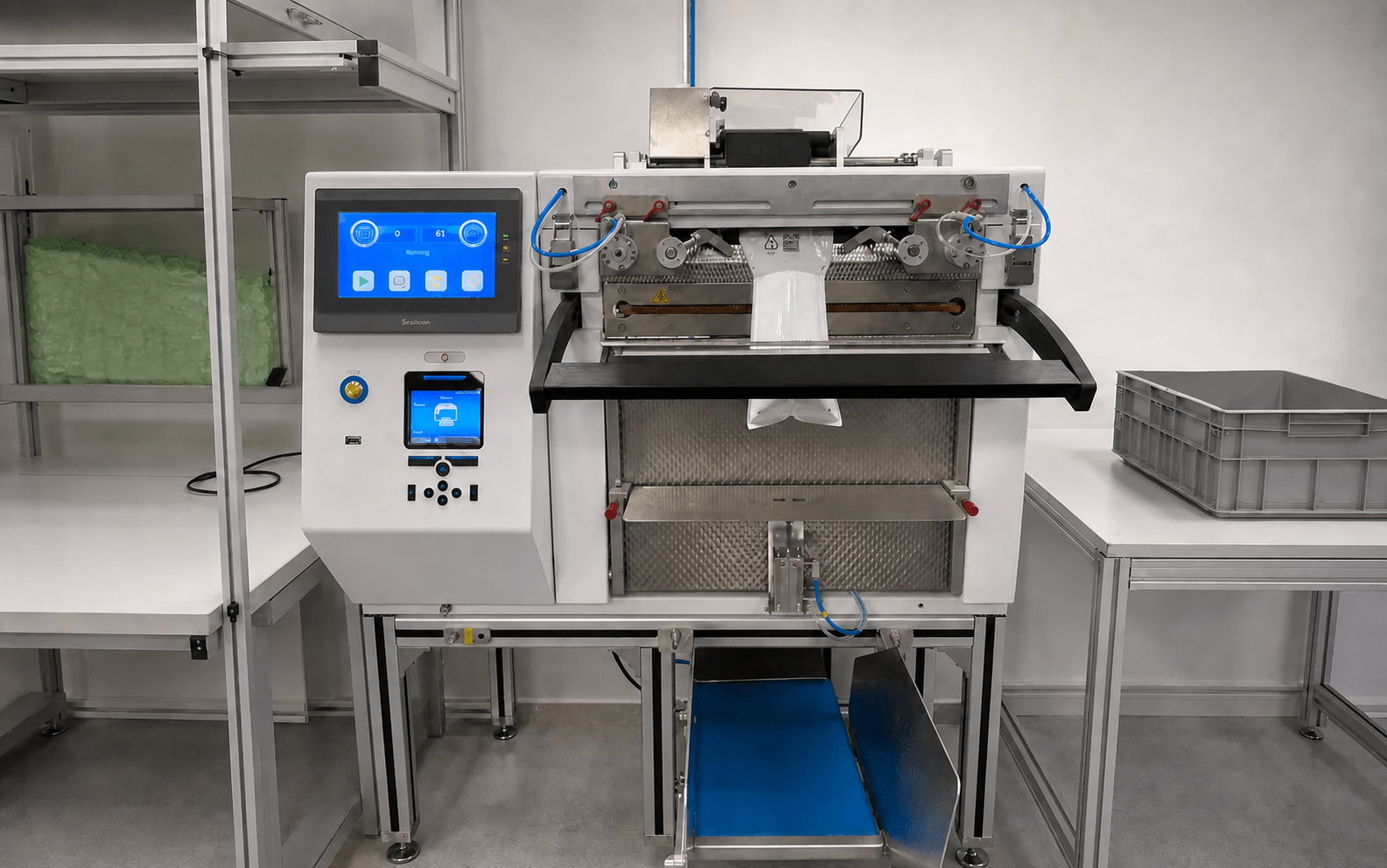
We assess the product, volumes, bag format, print requirement and onward process—then establish whether automated bagging offers a reliable commercial route.
Automation works best with repeatable products and a consistent finished-pack requirement. Samples are often needed before quotation.
Fasteners, fittings, brackets and installation components.
Manufactured components and replacement-product lines.
Counted sets, accessory packs and suitable collated items.
Repeatable products suited to flexible-film presentation.
There is no universal minimum run. Commercial suitability depends on product feeding, count, bag size, changeovers, print, materials and the amount of preparation before bagging.
For shorter or complex runs, manual or combined packing may be more appropriate. We recommend automation only where the complete process supports it.
Options are confirmed against the available equipment, product and required information.
Dimensions, film type, protection, seal and finished presentation are assessed for the application.
Product information, identifiers and barcodes may be printed where the selected process supports them.
Suitable components can be counted, grouped, assembled or inspected before entering the bagging stage.
Each step appears once because each step has a distinct purpose.
Product, dimensions, volumes, SKUs, current pack and target date.
Representative samples are tested for handling, film and finished quality.
Materials, preparation, checks, run basis and onward route are agreed.
Stock is received, processed, checked, cartoned and moved to the next stage.
Good information prevents a misleading unit price and speeds up the suitability review.
Potentially, yes. Print content, resolution, barcode requirements and bag format must be reviewed against the selected equipment.
Finished packs can be quality checked, bulk cartoned, stored, prepared for B2B delivery or connected to an agreed fulfilment workflow.
A trial helps establish suitability and method. Production performance still depends on representative stock, agreed materials and consistent product characteristics.
Send product details, dimensions, photographs and expected volumes. See How We Work →